Pages

4.14.2011

Crash Thursday: TV On the Radio - Nine Types of Light


Genre: Experimental Rock/Indie Rock
Origin: Brooklyn, NY

TV On The Radio has been Brooklyn's answer to experimental rock for some years now, laying somewhat deep on the underground circuit until reaching what is undoubtedly their closest mainstream album, Dear Science, only three years ago. There's a good reason why they had finally hit the mainstream: their eclectic and wide range of styles has proven them to be a great force in turning rock on its head, and their music up to this point has been nothing but transcendent.

I honestly chalk this up to Brooklyn and their location. It's a kind of scene that allows for true verbal expression and pulse-pounding beats that properly blend together and take the necessary steps to mix and match the appropriate sounds. Now with a new decade on our hands, they've offered us Nine Types of Light, a decidedly subtler album that clearly tones down that Brooklyn sound almost clearly in favor of their new locale on the West Coast. What I mean by that and what it ultimately comes down to is that it's a fine addition of songs to their catalog that will only help to continue their catapult into the public consciousness, but as a cohesive structure it just misses the essence of their previous work and feels rather light (no pun intended).

Let me set the record straight and suggest to you that each one of these songs is great in their own right. I've noticed that TV On The Radio are always best when both their lyrical content and music composition truly find that progression and expand to translate what the band is trying to express. This is no different on Nine Types of Light, except for the fact that the only real common thread here is "love" or the "idea" of it. This is not any new territory for them, as they've done plenty of talk about the meaning of love on previous albums. What it seems to me is that, overtime, that theme becomes such a thin thread holding these songs together. Not only do these songs' initially interesting sounds wear off quick, but each song would feel better fit to be spread amongst their previous albums (as if those albums really needed better balancing to begin with). Examples like "New Cannonball Blues" and "No Future Shock" could easily be songs off of Desperate Youth, Blood Thirsty Babes, and while they're most certainly good, they do not belong on this record.

"Second Song" starts things off well as a spritely number, but it amps up only to dip into the remaining and much more subdued first-half that takes singer Tunde Adebimpe on his road of love. This is love in the lighter sense of the theme, by the way. Songs "Keep Your Heart" and "You" find softer approaches to love that kind of keep Adebimpe at bay, as if having the listener really just lay back and attempt to approach the sounds at a slight ease. "Killer Crane" goes down an even gentler path, implementing a ballad-like entry of tender instruments and a banjo for shits and giggles.

It's actually almost too light for TV On The Radio, a band who've mixed both this theme with deeper and more thought-provoking ones like war and strife AND have them best represented by their thumping sound. That isn't to say a lighter approach to "love" is inferior or that there's anything wrong with Adebimpe going for this route because he tells it in a way that radiates with us. My conflict here is with their establishment of prior sounds that took them to grander places in more eloquent ways. I could understand if the aim was to build upon the theme by really changing the sounds to emulate those feelings, but in the end, this is TV On The Radio playing "love," and it ends up missing the point.

Perhaps the true centerpiece of Nine Types of Light is "Will Do". This song defies the above factors and represents exactly what TV On The Radio are best at, while at the same time really translating the slower beats to match the lyrics. It's got a very nice hook that takes it to the level of "TVOTR's Best Songs Ever" and it's the album real eye-opener as far as I'm concerned. It also starts a second-half that sounds like a completely different album, which almost makes me wonder why they didn't decide to go this path instead. The overall placement of "New Cannonball Blues" along with "Repetition" and "Forgotten" take a much more recognizable sound that, regardless of theme, they take on a quality that fits naturally in TVOTR's ballpark. Even if the songs do sound like they're coming off their other records, it's these moments that allow for comfort. I'm not suggesting that I don't "understand" the first half because it's "strange" or isn't comfortable - I'm merely suggesting that TVOTR play it best when they're on point.

This is by no means a misstep for TV On The Radio, but it's just a little overcooked. You've got a first-half that's soft-spoken and hanging on the same thread with the same sounds, and then you've got a second-half that makes a little more sense yet really swims in all the spectrums of their catalog. It's sort of all over the place for an album whose parts are better than a whole, and it may take a few listens on songs to really let them sink in. If anything, "Will Do" will be the song I come back to time and time again, really sticking out as one of TVOTR's best efforts. Nine Types of Light on its own will remain rather staggered, but that doesn't mean you shouldn't listen to these songs that have their full merits on their own grounds.

(The Deluxe Edition of the album also includes the bonus track "All Falls Down" and two remixes of "Will Do")

3/5

TV On The Radio - "Will Do"


TV On The Radio - "Second Song"


Nine Types of Light is available now on Interscope Records.

4.13.2011

Vid Break! Foo Fighters Hit Their Stride With "Rope"


Have you heard of the Foo Fighters? Long story short, ex-Nirvana drummer Dave Grohl and his band have taken what is essentially Alternative Rock and turned it into a global juggernaut. They helped to raise the ferocity that Rock used to emulate back in the day, and they have been continually recognized for their endeavors with several Grammy nominations and wins as well stand-out music videos. "Rope" can easily be considered one of them. The lead single off their latest LP, Wasting Light (which will be reviewed for tomorrow's Crash Thursday) not only grabs your attention sonically but also visually, as the guitar strums flicker the intensity that is "light" (hence the album's title) and as the pounding drums help dictate the editing of several angles. Sure, it's the band playing an awesome song to begin with, but the video also gives me confidence that the Foo Fighters have definitely stepped up their game with this one. Check it out!


-DJ

4.12.2011

Take 2 Tuesday: "Chain of Missing Links" by The Books


Genre: Experimental/Sound Collage
Origin: New York City, NY

This week's Take 2 Tuesday brings you The Books, an eclectic duo that quite honestly know what direction they're going in, even if we as listeners don't know where. Their off-kilter style of letting the different effects and loops overtake the synthesis of vocals and lyrics can oftentimes be funny and outright confusing, but I mean that in the greatest sense. It's a strange and unique quality to have considering that none of their contemporaries tend to do the same thing, and in that way, The Books are their own territory of music. "Chain of Missing Links" is only the tip of the iceberg on The Way Out, but even throughout their catalog, The Books like to change things up in what would be an "ordinary" genre and turn it into something that's wholly their own. Whether it's meditative or intrusive, The Books will take you on a ride of discovering something completely new.

The Books - "Chain of Missing Links"


-DJ

4.11.2011

In Case of the Mondays: Death Cab's New Album Opener Sneak Peek

Genre: Indie Rock

There has been a trend in the music industry over the past decade to shift the concentration from the album to the single. Obviously, online music stores such as iTunes and Rhapsody, have been the impetus for this change. Personally, I am not a fan of this because I believe an album should be swallowed whole, digested, and then quietly contemplated to find its value. Does that mean I am against singles? No, not at all. Many of the best songs every written were singles and need no album accompaniment to be enjoyed. However, such songs are few and far between. Nevertheless, despite my nostalgic and somewhat alarmist feelings that the days of true music appreciation in the mainstream are coming to a sad close, the pulse of culture beats on and we now see even indie bands getting onboard with the single-song mentality.

Death Cab for Cutie's upcoming May 31st release, Codes and Keys, is now available for pre-order on iTunes with the option of purchasing an iTunes Pass for an additional $2. Making this little extra purchase gives you access to a few songs released one by one every couple of weeks from now until the album release date; it also downloads the music video for the first single off the album, "You Are a Tourist," when it becomes available on iTunes, so the extra money is somewhat deserving. Now, I am a self-described DCfC fanatic (hence the obligatory fanboy acronymous spelling) and a bit of a sucker, so I bought the iTunes Pass. Sue me.

All that being said, let's get into it. The first song to download from the iTunes Pass (besides the previously mentioned and released single) was the album opener, "Home Is a Fire." The moment the song begins, it is clear that Death Cab is up to something very different for them. I honestly didn't know how to feel when I first heard it. It took listening through to the end of the song to come anywhere near close to understanding what they're trying to do with this new sound. I still don't know entirely how I feel about this new album or where they're going as a band, but whatever happens, I know it will be something very interesting, hate it or love it. So today we leave you with a song to ponder; a song to mull over as you go about your day. Sometimes, in case of the Mondays, daydreaming about the uncertain is exactly what you need to make it through.

Death Cab for Cutie - "Home Is a Fire" off Codes and Keys


-JB

4.10.2011

The Benchwarmer: Lo-fi vs. Hi-fi

Is music all in how it's produced? Given the idea that today's pop music sounds crispy and freshly made out of the oven (not in terms of lyrical content, though that's up for another discussion), it seems as if a lot of music is produced at a louder bit rate, a cranked bass or treble, and the recording quality is just overall clearer. At least I've noticed this kind of quality listening to music that comes from big-name record companies like Capitol, Interscope, Atlantic, and the like, but what about all of those artists who've yet to sign and are struggling to find their voice? They can gather up enough money to thankfully record one EP or LP out of their garage using basic equipment and the quality is very "lo-fi" and not nearly as clear, but hey, it's still music, right?


Vs.


I ask, now, about the intention of this sound. You may want to consider the types of artists that work out of their garages or work very independently. These artists that record and mix lo-fi like Ariel Pink have made a career out of creating albums that sound muffled and rigid and raw, and they are directly affected by what the lyrics imply or the music bellows. This kind of quality doesn't beg for clarity, but in fact begs for us to find a richer and more natural connection to the artist rather than layering compression or transformations to make that connection clearer. Of course it's great for us to be able to have clarity to listen in, but the effect of not being able to listen is Pink's mantra, giving an eerie sensibility to pay closer attention to the sounds you're either not hearing or not paying attention to.

So if I'm listening to an artist whose lyrics are intended to be deep or purveying, shouldn't it be more appropriate to record it in a lo-fi setting? Do you think having that sonicular clarity really matters to listen to the music, such as those recording hi-fi? Think about it.

-DJ

4.08.2011

Friday's End Note: Film Scores

I am first and foremost a moviegoer. I keep this blog because I have a great passion for music, but my first love will always go to film and the making of them. You've got a writer who writes a screenplay, who then shops it around until a director finds some interest, looking for a producer to help bring the screenplay to full reality and then going through a production schedule that's as hectic and painstaking but remarkably creative. It comes to post-production where the editing takes place and the sound is mixed, and once finalized it is marketed and screened in front of audiences the world over.

Of course I'm really simplifying the process, but you get the idea. You sit down in a crowded theater, the lights go down, and BOOM. A sweep of lush strings and brass surrounds you. Maybe some electronics kick it into high gear, or there's some very simple piano that pervades the credits over black. This music is film score, and it is so integral to the filmmaking process that it may easily fly over the heads of most moviegoers. It's what I consider a whole other experience in music listening that lets you understand the amount of mood or feeling and take you places you've only imagined or seen, well, on the big screen. Two composers stand out as my most loved film composers - not because they create great music, but because their music fully realizes the intent of the art to the point that your moods are as seamless with the events occurring on screen.


John Williams


Have you ever seen Star Wars? Indiana Jones? Jurassic Park? Anything made by film director Steven Spielberg? Then you've heard the grand spectacular work of John Williams. His 40+ years of work often consists of everything big and everything there, usually including themes that revolve around a particular character or setting. He's been nominated for so many Academy Awards I can't even tell you how many. In any event, he has opened up the world of film music to allow meaning and subtext that let the images speak for themselves instead of just being moving pictures. E.T., while still standing as one of Spielberg's best films, remains as poignant as ever with Williams' score, and it makes us soar on every listen.

John Williams - "E.T. - Flying Theme"


Thomas Newman


Thomas Newman is simply fascinating. Like Williams, Newman allows the freedom to really connect with the subtext of the story and characters, but on a much more simplistic scale. Implements of vibraphones, small piano chords or swift strings really help to elevate the much more subtler moments in the films he scores, such as American Beauty, The Shawshank Redemption, Road to Perdition, and even Wall-E. He may not be as purely well-known as Williams either, but Newman has created such a distinctive sound for himself that he becomes very recognizable and very pure. He's a wonderfully talented individual that helps us dive into the lives of others often like ourselves and takes us into deeper territories one might not have pictured on first arrival.

Thomas Newman - "The Bright Young Man" from Revolutionary Road


-DJ

4.07.2011

Crash Thursday: Panda Bear - Tomboy


Genre: Experimental/Psychedelic Pop
Origin: Baltimore, Maryland

Panda Bear's Tomboy is without a doubt one of the most anticipated albums to come out this year. Panda Bear - whose alias is that of Noah Lennox - is high and mighty off the heels of the major success as a member of Animal Collective and their recent masterpiece Merriweather Post Pavilion, and he released one of the most intriguing and surprising debut solo albums of the last few years, Person Pitch. There's reason for us as listeners to be both excited and worried, for his new album is to be met with high expectation and possible scrutiny. In anticipation, we were given what he decided to do as he did with Person Pitch and release a number of singles that would later be featured on the album. Surely this satisfied the hunger of fans as it did myself, but by listening to more than half of the album before its release were we really going to feel the same or feel cheated come April?

The answer is both "yes" and "no." With the help of final mixing by Sonic Boom, the singles that are heard on the album not only sound different, but they also find the molding that makes the songs feel like the parts of a sum. I'm not really sure I could have expected any less from him, but rest assured that, given the now, more subdued instrumentals and upfront effects that sort of loft and bounce around, Panda Bear finds the right mental notes that get you swirling from start to finish. Having said that, Tomboy does not feel like the grand spectacle that Person Pitch had, and in essence the singles do not cross over as anything new. This doesn't exactly hurt what the album is thematically speaking, as Person Pitch was the fancifully free and childish album and Tomboy is the album of growth and change, but it does not take the opportunity in some spots to take a completely fresh approach and make it as powerful as it tries to sound.

"You Can Count On Me" doesn't let up in starting the album on a good note, with a very echo-y beat that maintains itself throughout. The title track is much more dramatic, forcing the sounds to penetrate the surface to become much more pronounced and murky. It's also what feels like the most repetitious on the album, but it's not necessarily a bad thing. "Slow Motion" was great as a single, but in it's final form here, the sounds are again pronounced yet it still feels as fresh as it did earlier. The beat is sweetly slow and Noah so reverberated that it takes you up to the point where you feel wrapped up in a comfy warm blanket, even if the sounds themselves aren't so pretty.

"Surfer's Hymn" provides something shimmery and light, almost like something that I would probably find on Person Pitch but without the same grandeur. It's at this point on the album (Track 4) that I begin to notice that I'm really loving the sounds, but nothing here actually stands out or comes off as epic as it makes it out to be. It's all nicely knit when it comes to "Last Night At The Jetty" which takes its time letting the sounds master themselves, but even then do I notice that being lofty doesn't fully make it swing. That goes for "Drone" as well, with ambience that could be taken as either meditative or downright annoying.

Don't think that these songs are bad, though. They are very well composed and beautifully constructed, as in the case of "Alsatian Darn" and "Scheherazade". They feel like the tracks that sort of take the album into a much subtler route, giving the album some breathing room in such a sound-heavy environment. It really isn't until the final third of the album that Panda Bear gives us a greater scale of approaches with songs "Friendship Bracelet" and "Afterburner". "Benfica" is also beautifully arranged, even though it may not particularly serve as an establishing closer.

There's no doubt that Panda Bear has had a lot up his sleeve and that the product that is Tomboy is clearly a directional path for the artist. It's only slightly disappointing that, having heard the first half of the album and having some expectation, that the entirety of the album then finds a kind of sameness to it. This should not be a hinderance, however, in that Panda Bear really does create wonderful soundscapes that turn us inside out and all over. It takes a certain number of listens to really try and appreciate the depths that Tomboy reaches, and it's within the finer moments of the album that will give you the sense of grandeur that Panda Bear can muster.

4/5

Panda Bear - "Slow Motion"


Panda Bear - "Alsatian Darn"


Tomboy is available on the Paw Tracks record label on April 12th.

4.06.2011

Vid Break! Fleet Foxes - "Grown Ocean"


Seattle-based folk band Fleet Foxes have revealed a music video for the song "Grown Ocean" from their new sophomore effort, Helplessness Blues, dropping May 3rd. This isn't the first song that the band has released from the new LP (and apparently it's leaked), but upon hearing "Grown Ocean" and viewing the subsequent video that accompanies it, you know that you're going to be in for another stellar rush of excellent guitar work, beautiful vocal harmonies, and sweeping compositions. If Helplessness Blues is anything like their self-titled debut, I'll be keeping this record in my player for days-on-end.

4.05.2011

Take 2 Tuesday: "Echo's Answer" by Broadcast


Broadcast was an electronic English band headed by vocalist Trish Keenan. I say "was" because the band was effectively finished when Trish died of pneumonia this past January at the age of 41. I had honestly not heard of any Broadcast's material before hearing of her untimely death, but from what I can tell you is that I had been sorely missing out on excellent electronic instrumentation and very melancholic sounds that I can tell were deep from Trish's heart. Of course any artist tries to make that so, but if any of Broadcast's songs were to contribute to really letting the artist speak for his/herself, it's "Echo's Answer". It deserves to be heard, along with the rest of Broadcast's catalogue.

Broadcast - "Echo's Answer"

4.04.2011

In Case of the Mondays: Justice finds "Civilization"


That's right, folks! That big cross coming down upon us can only mean the French electro-house duo is back after a pretty sweet debut in 2007. The latest single called "Civilization" has been heard in a variety of ways through a new Adidas ad campaign, but it is now available in it's full form via iTunes. What more could we expect from these guys? We'll be finding out when they decide to release an LP in the near future, but for now we have an instant dance hit on our hands. Justice may be driving into familiar territory here, but in the case of the Mondays, this just might be the necessary drive to get out of your office chair and onto the dance floor. Thanks, Justice!

Justice - "Civilization"


-DJ

4.03.2011

The Benchwarmer: Discovering Now is Different Than Later?

I know that there are still bands I have yet to hear and I'm sure countless others have spent years listening to them, but does it really matter that I discover a band later than others?

Photo taken from news.cnet.com

I'm not saying I'm slow. I'm saying that I just haven't heard about this band until someone brought it up. I check them out, I like them, I listen to them, and now that artist has a new listener. I can feel ashamed for not having listened to them beforehand, but who cares? I'm enjoying their music now, right? According to others, though, I'm just another fan "joining the bandwagon" and now that artist isn't nearly as special to them.

Here's a more interesting scenario: Your best friend starts a band, and you've been his best friend for who knows how long, but now that the band has released what could be a huge single, EVERYONE knows who this band is. Do you feel that you have some higher authority because you were one of the "first" to listen to them, or now that everyone likes them and listens to them that you can't anymore? Is there any justification for this? I can't find any.

This is mostly in relation to this week's release of The Weeknd's mixtape release, which I reviewed on the last Crash Thursday. I've been reading numerous comments on Last.fm of people referring to the instant notoriety since the artist's appearance on Pitchfork and other music zines. Just because this artist was known to a certain few a couple weeks ago shouldn't mean that they have some sort of say, or at least calling new followers names that don't appear reasonable. Sure, Pitchfork is a site that reviews music and news, but I find joy in that I can discover artists that I've never heard of and bring them into my own consciousness. Isn't it better that your underground artist that only you knew about is finally getting his name out there? There's a reason why this person's music is appealing to people, and now that I'm aware of his talents, I feel I should embrace them, not keep them to myself.

Public awareness is something that shouldn't be shunned. Discovery is a unique part of the human mind, and it takes others more time to reach out and find new artists that appeal to them, and once those artists reach their consciousness then they've now made an impact on that listener. Why should it matter when you discover them? Why should others care that you discover them after they did? Think about it.

-DJ

4.02.2011

The Saturday Symbol: Stanley Donwood

In honor of this week's physical release of Radiohead's 8th LP, The King of Limbs, The Saturday Symbol would like to recognize the guy behind every single one of Radiohead's albums since 1995's The Bends, Stanley Donwood. He's worked on his own, of course, but he is widely recognized with creating some of the most iconic album art in music history.

(Clicking on the image will direct you to his website)

4.01.2011

Friday's End Note: A Bay Area Original - Not Just a One-Hit Wonder

Third Eye Blind

Genre: Alternative

I wish you would step back from that ledge my friend/Cut ties with all the lies that you've been living in/And if you do not want to see me again/I would understaaa-aaaa-aaaand

These lyrics from "Jumper" (sung just as typed, and usually horribly) are the first thing most people think of when they hear the name Third Eye Blind. What an unfortunate mistake.

Along with "Semi-Charmed Life," the first single off their self-titled debut album, this is all a lot of people know or care to know about Third Eye Blind, a band that many dub a 90's one-hit wonder band in the vein of Everclear or Marcy Playground. In reality, they may have been more of a one-album wonder, with their proceeding albums receiving very little mainstream success. Again, I say this is unfortunate. I do so because Third Eye Blind has released some of the most honest work of the last decade and a half. Their lyrics are simple, not cryptic; their music instantly evoking emotion.

The following are what I consider to be the single best songs from each of TEB's four LPs:

"Motorcycle Drive-By" off Third Eye Blind (1997)


This heart-on-your-sleeve account of the crumbling of a relationship and the subsequent bittersweet feelings of lonely freedom crescendo to a catharsis that is unmatched in many so-called "emo" songs of the punk persuasion. The song ends on a quiet, tender note, returning to the sadness that is expressed at the beginning.


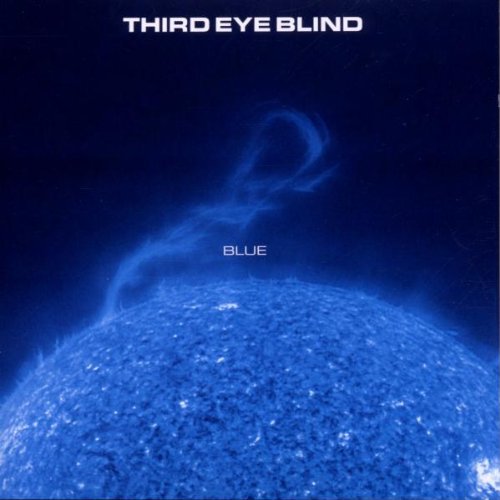
"Slow Motion" off Blue (1999)


Originally released in the US as an instrumental track only because of worries about its lyrical content, "Slow Motion" is a searing social satire of the movie-of-the-week treatment given to murderers by the media so readily during the 90's. Some of lead singer, Stephan Jenkins', lyrics can be taken as harsh, but as a work of art, they really make a great point.

"Blinded" off Out of the Vein (2003)


"Blinded" is a song with an absolutely irresistible level of energy. There's nothing overly complicated here musically; it's really one of TEB's poppier songs. But the sentiment in the lyrics is so genuine and speaks to the experience of attempting to operate on a platonic level with a former love in such a unique way that it becomes a standout track.

"Monotov's Private Opera" off Ursa Major (2009)


This track discusses that feeling as we get older of sorting out where we are, how we got there, and what it all means. It also showcases TEB's origin as a San Francisco band. The song has a laid-back, somewhat contemplative vibe to it, capturing the ethereal quality of the Northern California coast that is reflected so pervasively throughout the Bay Area.

-JB

3.31.2011

Crash Thursday: The Weeknd - House of Balloons


Genre: R&B/Experimental
Origin: Toronto, Ontario

We're only three full months into the new year, and we've already had a plethora of familiar artists putting out some quite outstanding music, even if the music does sound a bit same ol', same ol'. Now comes an unexpected discovery called House of Balloons by an up-and-coming R&B outfit from Toronto called The Weeknd. I say discovery because I had only heard about this artist for a couple days, but if there's any indication that 2011 is the next big year in music, their mixtape helps to cement that notion in many ways.

To put it simply, House of Balloons is sinful bliss. Topics like drugs abound throughout this 9-track mixtape, and they could not sound any better when the moods are escalated by The Weeknd's wonderful production and experimental beats and hooks that place you directly into a world so majestic you may never want to leave. Sure, these lyrics are nothing new to a genre like R&B, but they take interesting paths amidst this dreary wonderland The Weeknd has in store for us.

The majority of the album plays like its album cover and title imply - it's black and white lyrically and the music floats above you but discusses topics that send you straight to hell. Basically, it's an album that plays off an idea of contradictions, and that's the band's greatest strengths. Sometimes songs like "Coming Down," "High For This," and the title track implement sounds that probably should not find themselves together at one time, but The Weeknd's indelible mixture of distance and closeness feel right somehow. There are moments where autotune are used, but even in those instances do I find myself entranced in the composition and conception. I'm reading up that the title track uses a sample of "Happy House" by Siouxsie and the Banshees, and even that feels contradictory given the overall mood of the song, but it's mixed very well to the point that The Weeknd makes it works.

House of Balloons also has some damn sexy songs, such as "What You Need" and "The Morning" that make the entire experience even more defining. I don't necessarily mean sexy in that the songs talk about sex, but that the overall ambience produces a texture that's ear-gasmicly inclined. I enjoyed the vocal arrangements melding into the synth pads and electronics that, while sounding almost computerized, give the song the much needed natural element. "What You Need", takes off to what is instantly an album standout.

The only thing that really makes this from becoming something more than just an R&B album is the insistence of applying the same techniques to each song to maintain a linearity. Yes, each song features the dissonances and contradictions as I discussed above and that's very unique, but even THAT becomes quite more expected over the course of the tracks and slightly wears off. However, I absolutely dig what The Weeknd has to offer, and I can see House of Balloons becoming something that warrants the time and the energy to listen to by the thousands. Given the great production, the catchy beats and hooks, and the dissonant if consistent moods, I think The Weeknd are ones to look out for in the near future.

4.25/5

The Weeknd - "House of Balloons/Glass Table Girls"


The Weeknd - "What You Need"


House of Balloons is self-released and is available for free over at their official website.

Crash Thursday: Radiohead - The King of Limbs


Genre: Alternative Rock
Origin: Abingdon, Oxfordshire, England

(The King of Limbs has been available since its release this past February as a paid digital download, but considering it's physical release nationwide on Tuesday, I thought I'd make an official review here)

At a short run time and only 8 tracks, Radiohead has found itself on the middle of a tightrope. They're coming off the heels of the remarkably successful In Rainbows, cryptically revealing new material that hearkens back to albums prior, and having fans just in reach of having any new material at all. Does that mean that by reaching the end of the tightrope they'll be able to achieve the fan base they've created? Absolutely not. I seem to recall a album similar that had the challenging job to overcome the hugely successful OK Computer, and wound up in a place of personal reflection and exploration. It was not an album that achieved notoriety upon release and took a good amount of time to realize the intimacy that was Kid A. Readers, The King of Limbs is in the same vein - more experience than normal listening.

If you don't already know Radiohead, all I will really say is that they always tinker and experiment in every way of musical production, from cryptic titling to ambiguous mixing. Like the song titles imply, beginning with the magnificently clouded "Bloom," the album does exactly both things listed, juggling the idea of growth both lyrically and sonically, as I'm sure the album will likely grow upon the listener. Also sonically obvious in this album starter is Radiohead's return to "Amnesiac" territory, utilizing non-centric beats that are very much in the foreground compared to any other instrument repeated. The looped piano adds to the frenzy, and by this point you're wondering if the rest of the album is going to be nothing like "In Rainbows". The thing is, Radiohead has always had the amazing ability to take what is incomprehensible and make it unbelievably real. "Morning Mr Magpie" makes a seamless transition, again relying heavily on beat-making than anything else, but the indelible Thom Yorke sings so wearily (as he often does) that it helps bring some insanity to a clean finish. It's quick, feisty, and just plain outstanding.

Tracks "Little by Little" and "Feral" round out a very textured and mysterious first half, with frenetic electronic drum beats and soundscapes that sound oftentimes lonely and lost. Radiohead seems to have aimed in a direction of truly finding oneself within the sounds, that is until reaching "Lotus Flower," which is by far the most accessible song on the album. The groove is representative to efforts on "Hail to the Thief," presenting the last half of the album with a greater sense of being found. It features some of Yorke's finest lyrical composition and provides us with more instrumentation than could be found in the first half.

"Codex" features heavy reverbed piano over glimmering sound effects and Ed O'Brien's oh-so harmonious wail. It's arguably this album's "Pyramid Song", featuring a piano melody that's very much in the same scheme, but overall in composition. It's the one tender piece this album needed to reinforce Radiohead's canny ability to create beauty within the chaos, and it helps to keep the flow of what is beginning to be a "Radiohead" second half.

"Give Up The Ghost" brings acoustic guitar into the mix, along with chirping birds to signify the album's overarching themes of light in the dark. It's a calm, peacefully frightening song, if that makes any sense. Thom Yorke sings, "Don't haunt me/Don't hurt me" along melancholy chords that don't necessarily build but keep steady to make contrast. The album closer "Separator" is just as melancholy but fittingly poetic, producing a sound that takes us to the end of the beginning of a journey into darkness.

I wouldn't necessarily call this a concept album, but if there was any way to discover what it is that Radiohead is driving, they've certainly made me want to spend the time searching. You can hear past influences living amongst the sounds here, but Radiohead's latest is one that will most certainly be challenging, considering it has to live up to the remarkably successful In Rainbows. Yet The King of Limbs excels in pursuing intimacy and texture in the vein of Kid A, another album trying to find its voice amidst the huge success of OK Computer. I'm certain The King of Limbs will find the limbs it needs to grow and become one of Radiohead's considerably better efforts.

4.5/5

Radiohead - "Morning Mr Magpie"


Radiohead - "Codex"


The King of Limbs is now available in physical from via TBD Records.

3.30.2011

Vid Break! Death Cab's Chris Walla Talks New Album

With Death Cab for Cutie's new single "You Are a Tourist" hitting the radio this week, I thought it would be the perfect time to share this video of BBC Radio 1's Zane Lowe interviewing DCFC guitarist/long-time producer, Chris Walla. Walla discusses the band's decision to use a third-party producer for the first time in their 13-year, 6 (and soon to be 7) album career as well as the minimalist direction they have chosen to take for their upcoming album, Codes and Keys, dropping May 31st.

Walla is eloquent and affable as usual, a reminder of the fact that Death Cab is one of the most intelligent and down-to-Earth indie bands out there today.


P.S. Here is the new single off Codes and Keys:

Death Cab for Cutie - "You Are a Tourist"


-JB

3.29.2011

Take 2 Tuesday: "I Ran Away" by Coldplay


As a B-side to the wonderfully hypnotic "The Scientist" from A Rush of Blood to the Head, "I Ran Away" makes a lot of sense. It compliments the former in both lyrical content and somberness in every way, but while both songs' outlook can be interpreted as deftly bleak, "I Ran Away" comes out as significantly immediate. There's no question what "The Scientist" does in retrospect to the core of the album, but "I Ran Away" is a slice of Coldplay that need not to be taken amongst the others. Tangled in it's dreamy yet nightmarish landscape, Coldplay succeed in taking emotions higher and spinning rock a new record. Take a closer look.

Coldplay - I Ran Away


-DJ

3.28.2011

In Case of the Mondays: Flaming Lips/Neon Indians ask "Is David Bowie Dying?"


Wayne Coyne and the Oklahoma psych-rockers known as the Flaming Lips have teamed up with chillwavers Neon Indian to produce a 4-track, 12-inch EP whose title has yet to be publicly announced. This is the first in line of what the Flaming Lips have touted as a big year of new single-based releases, and as such, this EP has already sold out. Luckily for us, One Thirty BPM has released the first track "Is David Bowie Dying?" on SoundCloud. It's quite obviously the Flaming Lips continuing the overtly radical and distorted sounds heard on their last album Embryonic, but there is definitely a note of gentler and more minimalist approaches that Neon Indian provides. It's a nifty track that I'm willing to just close my eyes to and tune out the rest of the world. If you ever have those kinds of Mondays, then that may be just what you need.

Flaming Lips & Neon Indian - "Is David Bowie Dying?" by One Thirty BPM

-DJ

3.27.2011

The Benchwarmer - Reissues Can Be An Issue

You know that Pink Floyd album that you've played to death on your record player? It's scratched up and sounds like it's been through two world wars, but you have to admit that you still love the thing for it's sentiment. It's also probably out of print, so you know that hanging on to it is still worth it, even if you can't really listen to how it sounds anymore.

Now, you've just found out it's been reissued.


Reissues are usually an attempt by companies to sell the same product either because they didn't sound right when they were first released or buyer interest has re-peaked. A lot of reissues are also "remasters," in which sound engineers try to take the original master recordings and re-press them for rerelease so that new consumers can have a brand new vinyl or CD and have it sound exactly as it did way back when. I know, there's a lot of "re-" prefixed words in this blurb, but I believe the intention is obvious - everything is done again to make you feel comfortable.

This could be a generational thing, as I stated above that companies like to branch out to newer listeners. Other times, though, there may have been a pressing that may have done justice using the original production techniques, but now existing on newer technology sounds pretty weak and needs a few adjustments here and there.

When am I getting to the question, you ask? No, that wasn't the question, but in all seriousness, I'm interested in this sort of stuff. I mean, I'm only in my 20's, and I have grown up with a lot of older material such as The Beatles, the aforementioned Pink Floyd, and Led Zeppelin to the point that I realize that all I've been listening to are reissued and remastered recordings. I understand that I'm probably going to get sound that is as great as it was back then, but something feels different. Something isn't clear.

SO, if you knew that what you were listening to was your favorite and most cherished, but then it was just reissued with superior audio or with new or unused song material, would you still buy it? Do you get the same feeling as you did the first time? That's this week's The Benchwarmer.

-DJ

3.26.2011

The Saturday Symbol: Babies

What is it with babies gracing album covers such as this one?


In the last few days, the baby that graced Ready to Die has come out and revealed himself. He's 18 years-old and a senior in high school. The significance? Well, this isn't just a baby on any album cover. This is a baby on one of the greatest rap albums of all-time.

If you've ever noticed, a lot of classic popular and critically lauded albums have had babies on their album covers. The most notable ones that I could find are:

Nirvana's Nevermind
Van Halen's 1984
Radiohead's Pablo Honey
Lil' Wayne's Tha Carter III
The Cure's Galore
The Goo Goo Dolls's A Boy Named Goo
Sebadoh's Bakesale

What's the connection, you ask? That's what I'm trying to figure out. Each one of these albums are smashing successes that either changed the musical landscape or presented these artists in a new light, but even if the music is great, have babies in pools chasing dollars or smoking a cigarette have anything to do with their notoriety?

Does it seem as though they've become a marketing gimmick to sell an artist's records? I can't really make that claim, considering that these stand-outs have done so well on their own, but it is interesting to note their symbolic nature in the state of music. Honestly, I think people just generally love babies, but these albums do refer to a type of youth or innocence that's in a much darker sense than what might be topically implied. Sure, babies may be an easy sell, but their skin's soft complexion and unexpected facial expressions emit this concept of past, present, and future, and an unknowingness of their world that many of these bands have employed as part of the undertones of their music and lyrical content. They're a type of symbol that not only makes us see the outside or the cover and think it's fondly, but they also make us look closer within ourselves and our reflections.

-DJ