Pages

Showing posts with label Benchwarmer. Show all posts

4.10.2011

The Benchwarmer: Lo-fi vs. Hi-fi

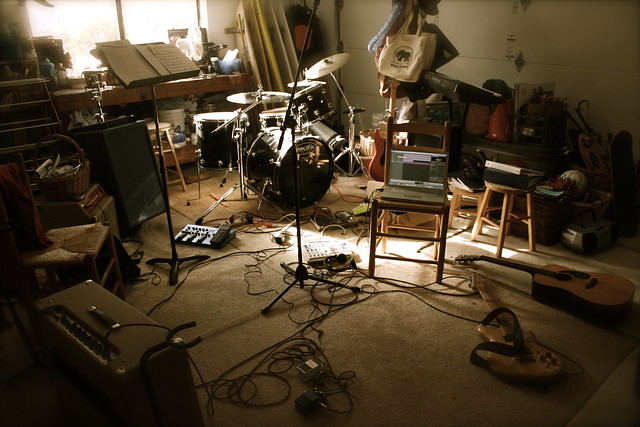
Is music all in how it's produced? Given the idea that today's pop music sounds crispy and freshly made out of the oven (not in terms of lyrical content, though that's up for another discussion), it seems as if a lot of music is produced at a louder bit rate, a cranked bass or treble, and the recording quality is just overall clearer. At least I've noticed this kind of quality listening to music that comes from big-name record companies like Capitol, Interscope, Atlantic, and the like, but what about all of those artists who've yet to sign and are struggling to find their voice? They can gather up enough money to thankfully record one EP or LP out of their garage using basic equipment and the quality is very "lo-fi" and not nearly as clear, but hey, it's still music, right?


Vs.


I ask, now, about the intention of this sound. You may want to consider the types of artists that work out of their garages or work very independently. These artists that record and mix lo-fi like Ariel Pink have made a career out of creating albums that sound muffled and rigid and raw, and they are directly affected by what the lyrics imply or the music bellows. This kind of quality doesn't beg for clarity, but in fact begs for us to find a richer and more natural connection to the artist rather than layering compression or transformations to make that connection clearer. Of course it's great for us to be able to have clarity to listen in, but the effect of not being able to listen is Pink's mantra, giving an eerie sensibility to pay closer attention to the sounds you're either not hearing or not paying attention to.

So if I'm listening to an artist whose lyrics are intended to be deep or purveying, shouldn't it be more appropriate to record it in a lo-fi setting? Do you think having that sonicular clarity really matters to listen to the music, such as those recording hi-fi? Think about it.

-DJ

4.03.2011

The Benchwarmer: Discovering Now is Different Than Later?

I know that there are still bands I have yet to hear and I'm sure countless others have spent years listening to them, but does it really matter that I discover a band later than others?

Photo taken from news.cnet.com

I'm not saying I'm slow. I'm saying that I just haven't heard about this band until someone brought it up. I check them out, I like them, I listen to them, and now that artist has a new listener. I can feel ashamed for not having listened to them beforehand, but who cares? I'm enjoying their music now, right? According to others, though, I'm just another fan "joining the bandwagon" and now that artist isn't nearly as special to them.

Here's a more interesting scenario: Your best friend starts a band, and you've been his best friend for who knows how long, but now that the band has released what could be a huge single, EVERYONE knows who this band is. Do you feel that you have some higher authority because you were one of the "first" to listen to them, or now that everyone likes them and listens to them that you can't anymore? Is there any justification for this? I can't find any.

This is mostly in relation to this week's release of The Weeknd's mixtape release, which I reviewed on the last Crash Thursday. I've been reading numerous comments on Last.fm of people referring to the instant notoriety since the artist's appearance on Pitchfork and other music zines. Just because this artist was known to a certain few a couple weeks ago shouldn't mean that they have some sort of say, or at least calling new followers names that don't appear reasonable. Sure, Pitchfork is a site that reviews music and news, but I find joy in that I can discover artists that I've never heard of and bring them into my own consciousness. Isn't it better that your underground artist that only you knew about is finally getting his name out there? There's a reason why this person's music is appealing to people, and now that I'm aware of his talents, I feel I should embrace them, not keep them to myself.

Public awareness is something that shouldn't be shunned. Discovery is a unique part of the human mind, and it takes others more time to reach out and find new artists that appeal to them, and once those artists reach their consciousness then they've now made an impact on that listener. Why should it matter when you discover them? Why should others care that you discover them after they did? Think about it.

-DJ

3.27.2011

The Benchwarmer - Reissues Can Be An Issue

You know that Pink Floyd album that you've played to death on your record player? It's scratched up and sounds like it's been through two world wars, but you have to admit that you still love the thing for it's sentiment. It's also probably out of print, so you know that hanging on to it is still worth it, even if you can't really listen to how it sounds anymore.

Now, you've just found out it's been reissued.


Reissues are usually an attempt by companies to sell the same product either because they didn't sound right when they were first released or buyer interest has re-peaked. A lot of reissues are also "remasters," in which sound engineers try to take the original master recordings and re-press them for rerelease so that new consumers can have a brand new vinyl or CD and have it sound exactly as it did way back when. I know, there's a lot of "re-" prefixed words in this blurb, but I believe the intention is obvious - everything is done again to make you feel comfortable.

This could be a generational thing, as I stated above that companies like to branch out to newer listeners. Other times, though, there may have been a pressing that may have done justice using the original production techniques, but now existing on newer technology sounds pretty weak and needs a few adjustments here and there.

When am I getting to the question, you ask? No, that wasn't the question, but in all seriousness, I'm interested in this sort of stuff. I mean, I'm only in my 20's, and I have grown up with a lot of older material such as The Beatles, the aforementioned Pink Floyd, and Led Zeppelin to the point that I realize that all I've been listening to are reissued and remastered recordings. I understand that I'm probably going to get sound that is as great as it was back then, but something feels different. Something isn't clear.

SO, if you knew that what you were listening to was your favorite and most cherished, but then it was just reissued with superior audio or with new or unused song material, would you still buy it? Do you get the same feeling as you did the first time? That's this week's The Benchwarmer.

-DJ

3.20.2011

The Benchwarmer - The "Art" of a DJ

When I first think of music, I listen to all the sounds that make this seem possible, often followed by lyrics that are relevant to the feeling the sounds portray. All of these individual instruments are played by different people (usually), and when combined makes a fully-composed song.

Now answer me this: Does DJ-ing count as music?


Disc jockeys are exactly what the name implies, cueing music that has already been made in succession to another song that has already been made. However, a lot of DJ's can add to the mix and blend two or more songs to make an entirely new one.

So, even though the music is pre-recorded and already established as a song, but used by a DJ in a way that transforms that song into a new one, is that considered music?

Take Girl Talk for example. He has the incredible talent of sampling over 100 songs in different ways over the course of a full-length record, and the results are killer. Whether he matches the beats per minute to the exact seconds or somehow manages to place an artist's lyrics with another artist's seemingly relevant music style, Girl Talk is a master DJ. It's deciding if what he is doing is actually "making" music that is this week's The Benchwarmer.

- DJ (how ironic?)